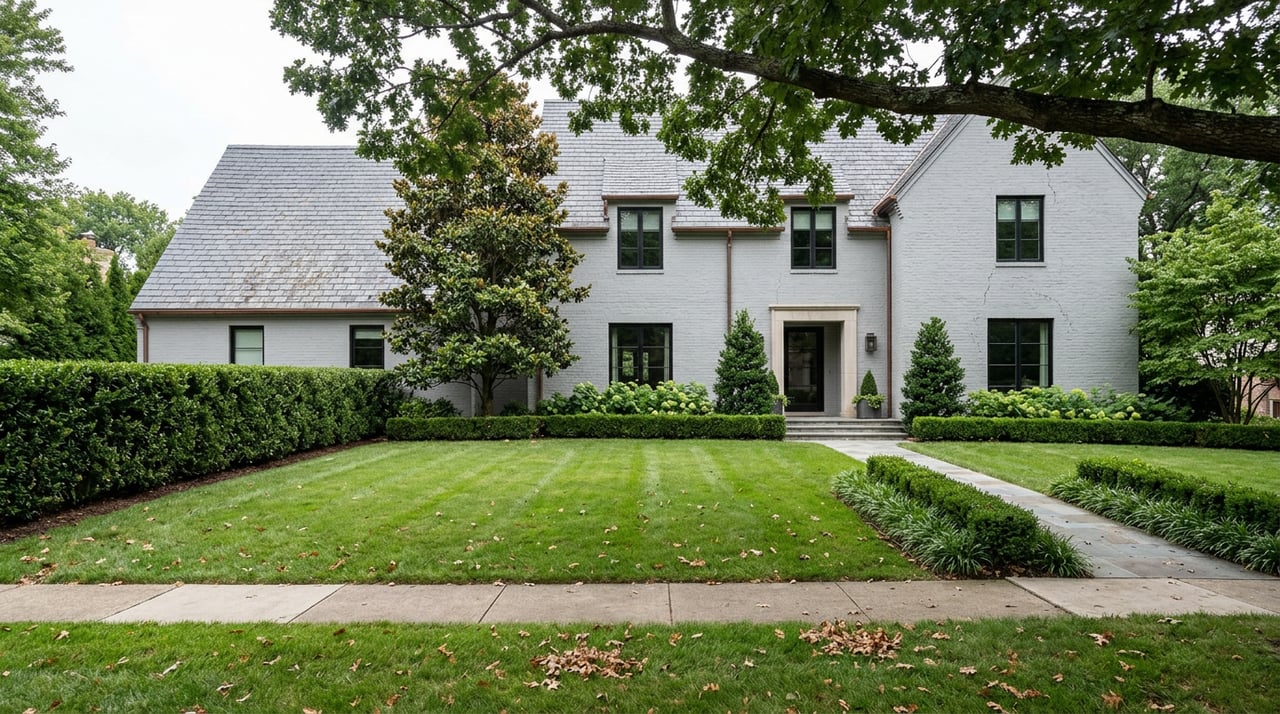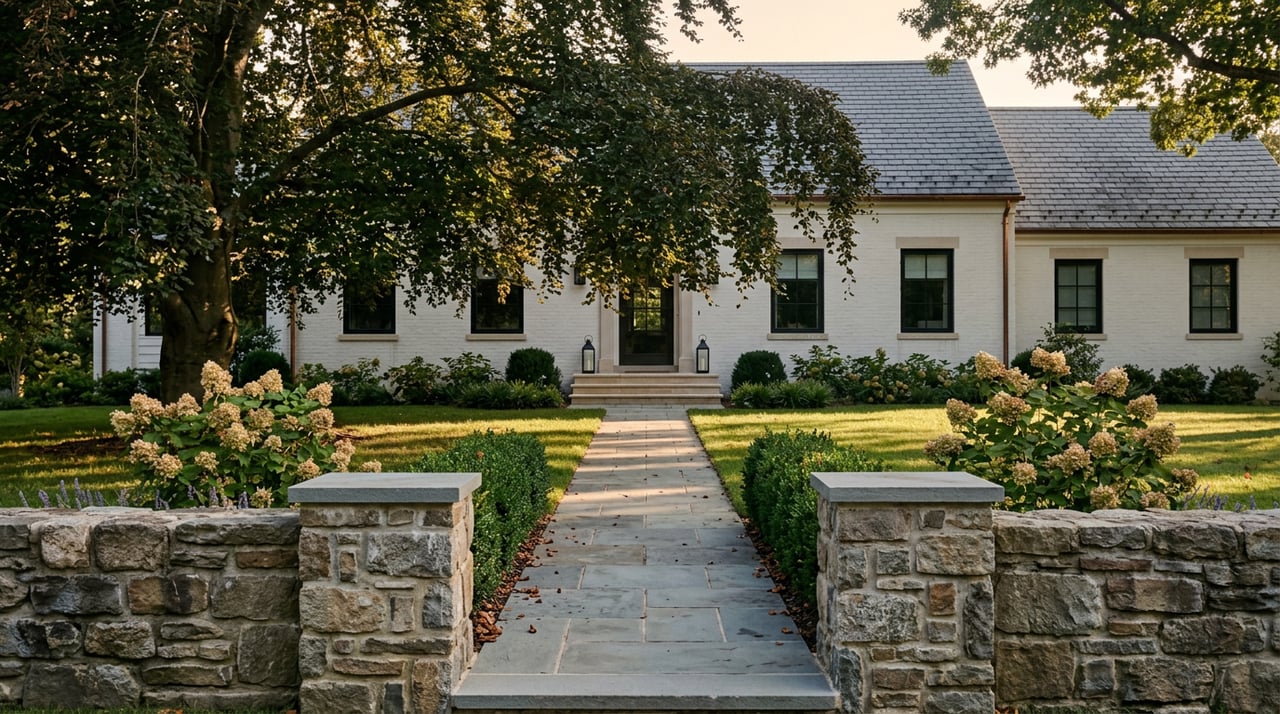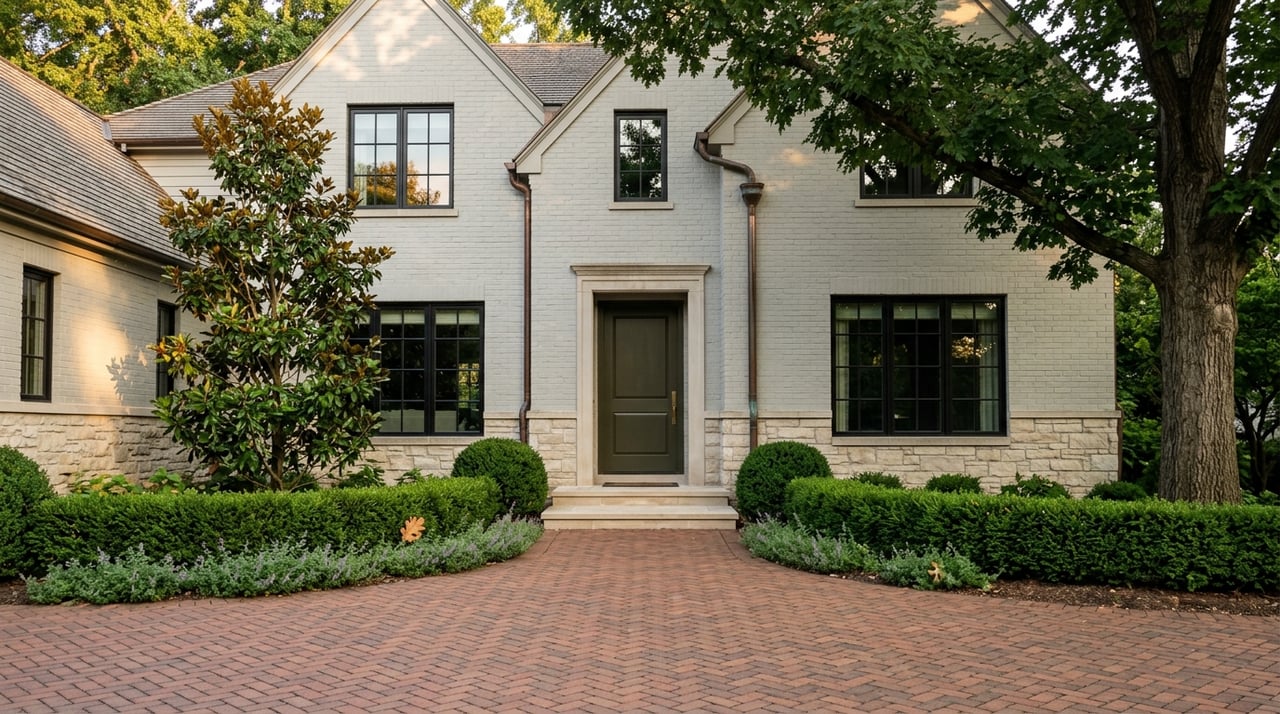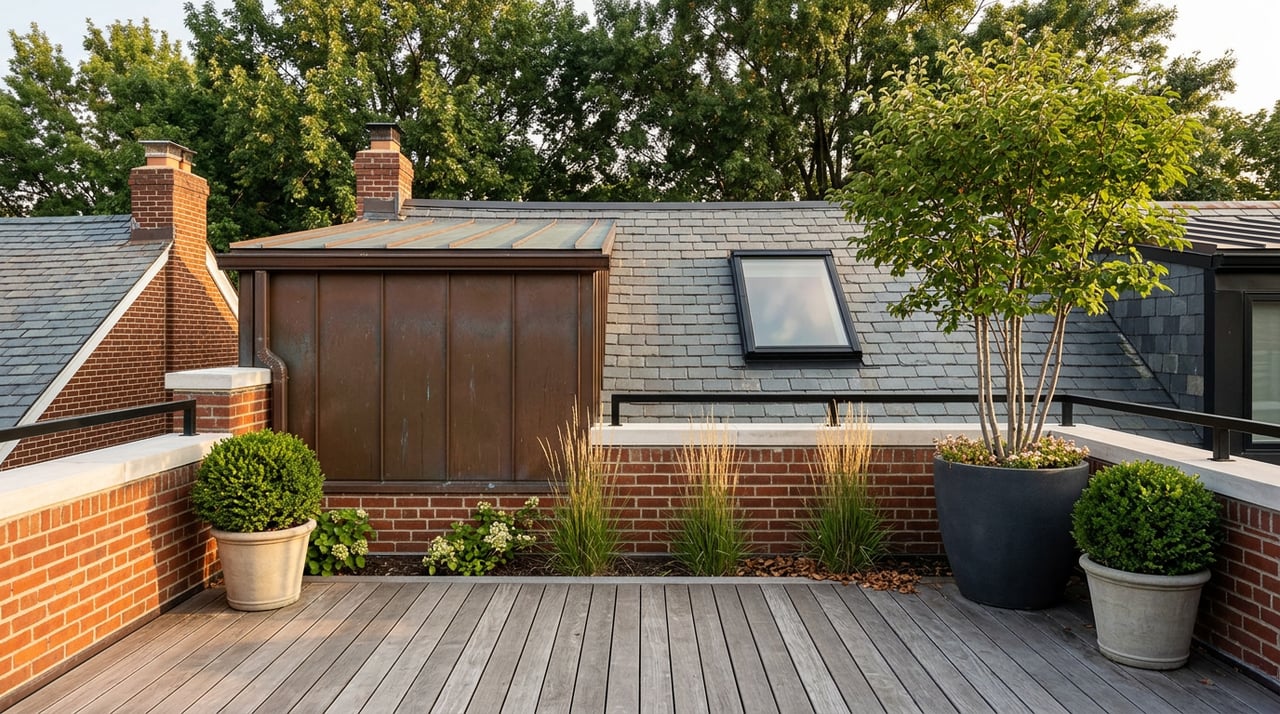
A homeowner in Georgetown wanted to move an electric meter. That's it. Relocate a small metal box a few feet along the back wall of the house. In January 2026, the Commission of Fine Arts approved the request, but only after the Old Georgetown Board directed that the meter be installed behind the stoop where it would not be visible from the street, that the existing basement windows be repaired rather than replaced, and that only the exterior storm windows be removed while interior storms went in instead. A federal design review board weighed in on where an electric meter could sit.
That level of scrutiny is not an outlier. It is the baseline for anything visible from a public street or alley in Georgetown, and it is the piece of the market that a median price on a listing portal cannot show you. If you are comparing Georgetown to another close-in DMV neighborhood right now, the number you are staring at, whether it is a condo listing or a rowhouse listing, is only half the story. The other half is how much regulatory friction sits behind that price, and it does not fall evenly across property types.
What Actually Triggers a Hearing
Congress designated the Old Georgetown historic district in 1950 under the Old Georgetown Act, and gave the U.S. Commission of Fine Arts authority to review exterior design in the neighborhood through an advisory panel called the Old Georgetown Board. The rule that matters most to a buyer or seller is narrower than "historic district" makes it sound. Per the Commission's own guidance, review is not required if there are no changes proposed to the exterior of a property. Interior renovation, gut kitchens, new mechanicals, reconfigured floor plans, is generally outside the Board's scope.
What does trigger review is almost anything visible from the street: window and door replacements, rooftop mechanical equipment like vents and condensers, visible electrical wiring and lighting, decks, roof terraces, and signage. That list is long enough that most meaningful rowhouse projects touch it somewhere.
The Calendar You Won't See on a Listing
The Board meets once a month. Straightforward projects can be approved on a consent calendar without a full presentation. Anything more complex gets a hearing, and the recommendation then goes to the full Commission of Fine Arts for final action about two weeks after the Board meeting. Only after that is a building permit possible.
Approvals do not last indefinitely either. Per the Commission's FAQ, permit approval expires after four years if construction has not substantially started, which means an owner who gets a green light and then waits too long has to go back through the process.
None of this is disclosed on a Zillow listing. It shows up later, in the seller's disclosures, in the contractor's proposal, or in the closing timeline a buyer didn't budget for.
Two Real Projects, One Pattern
The Flour Mill conversion on the waterfront is a useful illustration of scale. The project, converting a historic mill building from office use to residential and retail, went through multiple rounds of Commission review across the first half of 2026, from an early design development submission in January to detailed permit conditions in May. Reviewers weighed in on the exact brick blend to use on infill sections, the mortar color between ribbon windows, the color of window frames and infill panels, and whether the "W" in the mill's original painted sign would remain visible. A single redevelopment project generated that much specificity on materials most buyers would never consciously notice.
New construction faces the same gate. In spring 2026, a development team proposing six townhouses and two penthouses on an M Street property had to bring the plan before the Old Georgetown Board for a hearing because the site sits inside the historic district. Whatever gets built there, the timeline to bring it to market runs through this review first.
Smaller businesses feel it too. A halo-lit sign for a retailer called Frankies Bikinis was approved in spring 2026 only after the applicant removed an existing unapproved sign and shrank the new one to no taller than twelve inches. Back in 2025, a J.Crew wall sign was approved on the condition that an unpainted brick section of the building stay unpainted. These are not dramatic cases. That is the point. Even routine signage carries a review cycle in Georgetown that would not exist a few blocks outside the historic boundary.
What This Means for the Price Gap You're Actually Looking At
As of July 2026, active Georgetown condo listings showed a median price around $800,000, while active townhouse listings in the same neighborhood showed a median around $2.19 million, according to a local market summary of current inventory. That is not simply a size difference. Condo interiors sit outside the Old Georgetown Board's jurisdiction entirely. A condo owner replacing kitchen cabinets or refinishing floors never touches this process. A rowhouse owner replacing a window facing the street does, every time.
Here is what that split looks like when you set the two products side by side.
| Condo | Rowhouse or Townhouse | |
|---|---|---|
| Median asking price (Georgetown, July 2026) | Around $800,000 | Around $2.19 million |
| Exterior review exposure | None for unit interiors | Applies to nearly all street-visible work |
| Who absorbs approval risk | Building association, rarely | Individual owner, on every visible project |
| Typical monthly carrying cost | HOA fees such as $1,238 and $1,515 seen on current listings | Property-specific, no shared association layer |
| Renovation timeline exposure | Low, interior work is generally exempt | Consent calendar to full Board hearing to a follow-up Commission vote |
Zillow's most recent home value estimate for Georgetown, updated through the end of June 2026, put the average home value at just over $1.5 million, up 2.3 percent over the prior year, with homes going to pending in around two weeks. That average blends both product types, which is exactly why it can mislead a buyer who is choosing between them. A fast-moving average masks two very different ownership experiences sitting underneath it.
Citywide, the broader Washington market has cooled somewhat. Over the three months ending in June 2026, the median sale price across Washington, DC sat around $700,000, down 2.2 percent from the same period a year earlier, with homes taking about 47 days to sell on average. Georgetown's pending timeline running faster than the citywide average, even as citywide prices soften, tells you demand for Georgetown product specifically has not slackened the way it has elsewhere. What's shifted less clear is whether that demand is chasing the rowhouse stock, where review friction constrains new supply, or the condo stock, where it doesn't.
The Practical Read for a Buyer or Seller
If you are weighing a Georgetown rowhouse against a comparable option somewhere without a federal design overlay, the price difference you're seeing is not purely a location premium. Part of it reflects the fact that anyone who owns that rowhouse and wants to touch its exterior enters a process with a monthly meeting cadence, a follow-up federal vote, and a four-year clock on any approval they receive. Sellers who have already been through that process, and have documentation of Board-approved work, are offering something a buyer cannot easily replicate on an unrenovated or undocumented property. That paperwork has value, even when it never appears as a line item.
If your comparison is condo versus rowhouse within Georgetown itself, the $800,000-to-$2.19-million spread is measuring more than finish level and square footage. It is measuring exposure to a review system that only one of those two products has to live inside.
A Few Questions Worth Asking Before You Write an Offer
Does buying a Georgetown condo mean I never deal with historic review? For your unit's interior, generally yes. The building's exterior, common areas, and any shared systems still fall under the same rules that apply to rowhouses, so ask your building's association whether any exterior capital projects are pending.
If a past owner made changes without approval, is that my problem now? It can be. An unpermitted exterior alteration can surface during a title search or inspection and become a negotiating point or a condition of sale. Ask directly whether any exterior work, including windows, decks, or mechanical equipment, has documentation of Board approval.
Does a faster citywide market mean Georgetown renovation timelines are speeding up too? Not necessarily. The Board's meeting schedule and the Commission's follow-up vote run on their own calendar regardless of how quickly homes are selling. Budget for that separately from how competitive the market feels.
Understanding where the friction sits, and what it's worth to a seller who has already cleared it, is the kind of detail that changes how you negotiate rather than just how you shop. If you're weighing a Georgetown purchase or preparing a rowhouse for market and want to talk through what your specific property's review exposure looks like, The DC Team can walk you through it. Schedule a Consultation to start the conversation.